 Français
A day unlike any other. Historic, yet long forgotten. This Friday, October 9, Saint Barthélemy commemorates the abolition of slavery on the island. This date is very different from the one chosen by France and its overseas territories, where the enslavement of human beings was practiced for centuries. Quite simply because it was not France but Sweden that abolished slavery in Saint Barthélemy.
For nearly a century, from 1784 to 1878, Saint Barthélemy was a Swedish colony. It was through research conducted by Richard Lédée that the date of October 9, 1847, resurfaced. On June 12, 2009, again thanks to Richard Lédée’s persistence, the territorial council unanimously adopted a resolution recognizing October 9 as the official date of the abolition of slavery in Saint Barth. It took the French government three more years to issue a decree, on April 23, 2012, which definitively established this day as the one on which the island’s last slave was freed from her chains. Her name was Marie-Françoise, known as Mélanie, who was the 523rd and last slave to be freed in Saint-Barthélemy by the Swedish Crown. According to several sources on the demographic structure of Saint Barthélemy in 1846, Sweden recorded 2,630 inhabitants on the island at the time, including 1,308 whites, 788 “free people of color,” and 534 slaves.
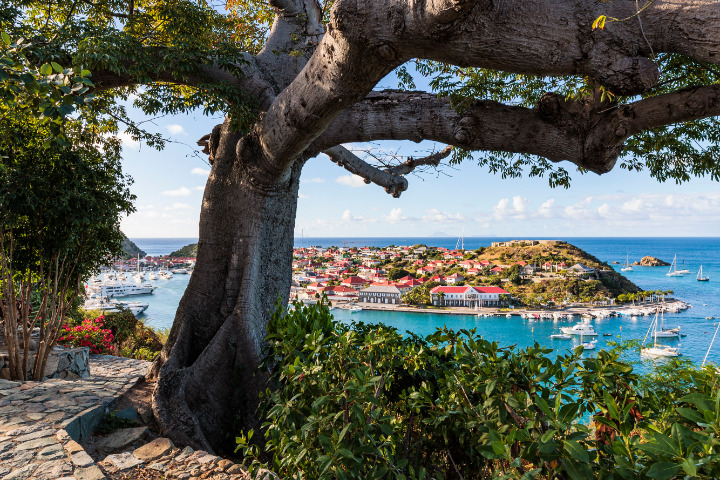
It was in 2023, at the initiative of the prefect at the time, Vincent Berton, that the first official ceremony commemorating the abolition of slavery was held at Fort Gustav III, beneath the breadfruit tree. On that occasion, students from Mireille Choisy Middle School unveiled a plaque to remind the residents of Saint Barthélemy of this part of their history and to pay tribute to all the victims of slavery (JSB 1536). It is precisely at the foot of the breadfruit tree that the ceremony commemorating the abolition of slavery will take place this Friday at 5:00 p.m.
School Visit

The day before, on Thursday, October 8, the Saint-Barth Héritage association held a presentation at the Sainte-Marie de Colombier Elementary School. The students, who are already studying the history of Saint Barth, discovered another side of their island through archival images—particularly from Sweden—that were the result of historical research. In addition, interactive workshops based on the fourth- and fifth-grade curricula and inspired by human rights methodologies and training programs from the European Commission and the Council of Europe allowed them to engage with the concepts of slavery and freedom. This initiative by Saint-Barth Héritage was a huge success with schoolchildren last year. In fact, the children’s active participation in the workshops and their eagerness to gain a deeper understanding helped achieve the historical and educational goals of the project.