 Français

The Coralita association was created by the Soroptimist Club of Saint-Martin. Since then, it has developed around a major ambition: "To contribute to people's autonomy. "In this case, children and adults with disabilities. In Saint-Barthélemy, Coralita brings together three services, three distinct structures. The CAMSP (Centre d'action médico-social précoce), for children aged 0 to 6, the Sessad (Service d'éducation spécialisée et de soins à domicile) for 6-18 year-olds, and the Samsah (Service d'accompagnement médico-social pour les adultes handicapés). Ghislaine Morice works as a specialized educator in all three departments, with the support of Karine Déchelette, psychologist at the Sessad, who is acting as interim manager for six months.
A limited number of places
The CAMSP looks after four children. "Families can come with a letter from their doctor, without waiting for the Centre médico-social to notify them of a referral," explains Ghislaine Morice. Although the structure has only four places, it can carry out early assessments and diagnoses. Thanks to the support of professionals based on Saint-Martin, such as a neuropsychologist and a speech therapist, who regularly come to Saint-Barthélemy.
For the Sessad, a commission decides whether the child needs to be referred to a specific structure. Then comes the diagnosis. "But just because a child was at the CAMSP doesn't mean he or she will automatically join the Sessad," Karine Déchelette points out. Especially as the Sessad only has a limited number of places. Seven, in this case. "Children can be detected as early as school, but few stay until they're 18", explains the psychologist.
Samsah, like CAMSP, has four places available. For people with disabilities who are still independent," stresses Ghislaine Morice. The aim is to help them gain a foothold in society, socially and/or professionally. "It should be noted that the number of places has remained the same in the three structures for 17 years, since the creation of the Sessad. "In Saint-Barth, the creation of the Sessad was more chaotic, due to difficulties in setting up the facility and finding accommodation," explains the specialized educator.
"Professional inclusion is fantastic".
Among her main missions, Coralita stresses the importance of inclusion. We try to link up with all the local players," assures Ghislaine Morice. Schools, families, medical and social professionals... It's important to get everyone's opinion. We don't work in isolation. "In fact, it's necessary to "pass the baton" when the children leave the structure. The existence of the CFA (Centre de formation des apprentis, editor's note) is an interesting way of considering a professional future," emphasizes Ghislaine Morice. Professional inclusion is fantastic. Being able to work changes everything for people for whom, sometimes, everything is complicated. "
In reality, disability in Saint-Barthélemy remains "complicated". Whether it's visible, invisible or even sometimes hidden. "That's why it's important for us to explain how our structures work and make things clear," says the specialized educator. An anchor point is just as important. For a long time, we had no premises," recalls Ghislaine. We only moved to Merlette two and a half years ago. But we don't do everything here. We do a lot of outside work. "Nevertheless, a central point for all the organizations would have significant advantages.
"For the issue of inclusion, it would be beneficial to be in Saint-Jean," explains Ghislaine, referring to the Pôle Autonomie et Handicap, which has been slow to see the light of day. "The whole point of this hub would be to be grouped together, but also to be close to other structures," insists the specialized educator. The stadium, the playground, but also the future school complex.
The daily work carried out within Coralita's three structures is a long-term process. It's a "gradual adaptation", a process that concerns disabled children and adults, as well as parents, teachers and the general public. In a context that often proves unfavorable, due to the absence of certain health professionals, for example.
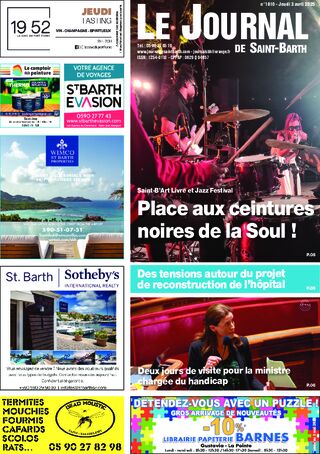
A series of issues that the association's representatives will undoubtedly be able to discuss on April 8 and 9 with the French Minister for Autonomy and Disability.