 Français
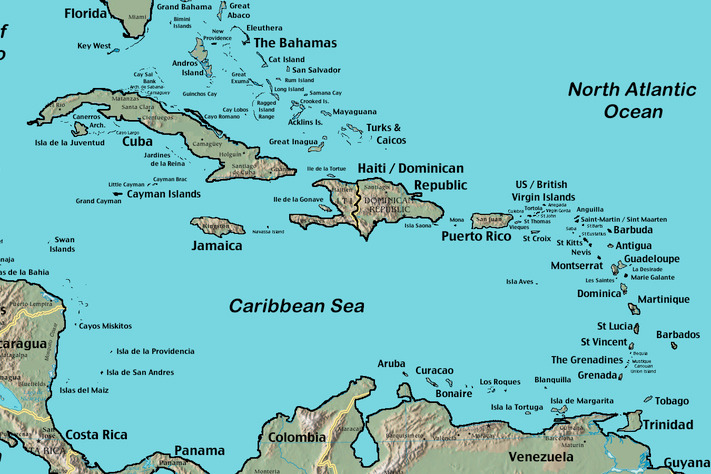
Cuba.
Widespread power outage and deadly hurricane
An energy crisis combined with the passage of a Category 1 hurricane - that's the situation facing the people of Cuba since last Friday. It all began with a widespread power cut. On Friday October 18, virtually the entire country was left without electricity. This was just as Hurricane Oscar was approaching. The phenomenon hit the island on Sunday evening with winds approaching 130 km/h, reports Agence France Presse. It was then downgraded to a tropical storm before moving away from Cuba on Monday evening. Seven people died during the hurricane's passage. Six in San Antonio del Sur and one in nearby Imias. In both towns, flooding "at historically unprecedented levels" occurred, with more than 366 millimeters of rainfall recorded in 24 hours, according to Cuban authorities. Roofs were swept away, houses destroyed, electricity poles and trees toppled. At the same time, technicians from the national electricity company succeeded in gradually restoring power to homes. Still according to AFP, for the time being, the eastern provinces of Guantanamo and Santiago de Cuba are those where electricity availability remains weakest. On the other hand, in the west of the island, where Havana is located, service has been restored to 95%, while on Tuesday it was between 40% and 60% in the center of the country. Nevertheless, the government continues to apply load shedding measures to deal with the energy crisis. This has led to angry demonstrations by some of the island's population. Particularly in the capital, Havana.
Martinique.
Night-time violence continues
In Martinique, appeasement is not yet the order of the day. Almost every night, there are clashes between the gendarmerie and "demonstrators". Despite the curfew imposed by the prefecture and extended until October 28. La 1ère highlights the fact that the violence is spreading to different areas of Fort-de-France. Batelière, Anse Gouraud, Pointe de Jaham, Fond Lahaye and Terres-Sainville have all experienced a difficult night since the start of the week. For around an hour, residents of the cité Batelière lived to the rhythm of explosions, gunshots and gas detonations," said Christine Cupit, a journalist with La 1ère. I was in my car, I lived it, I don't think many people were able to sleep. "Other disruptions due to "the impassability of several areas" were also noted, as La 1ère pointed out. According to the transport authority, several urban lines were not served on Wednesday morning. The commune of Cas-Pilote was also the scene of violence throughout Tuesday. For the record, demonstrations and violence began over a month ago in Martinique as part of the movement to combat the high cost of living. Quoted by Courrier International, author Raphaël Confiant describes the problem as more political than economic: "Can a territory located in America [...] continue to depend on a country, namely France, located in Europe and 7.500 kilometers away? "Silyane Larcher, a Martinique-born professor in the Black Studies Department at Northwestern University in Illinois, believes that "we need to find legal ways to weaken the position of France. legal means must be found to weaken this monopolistic position in order to provide an adequate response to the root of the problem, which is the transformation of this counter [commercial] economy".
Saint Kitts and Nevis.
OECS prosecutors hold congress
The Legal Affairs Committee of the Organization of Eastern Caribbean States (OECS) held its 36th meeting of member countries' Attorneys General last week. The meeting, held in St. Kitts, focused on the OECS National Identification Bill and Conditional Rights Legislation. In a statement issued prior to the meeting and relayed by Caribbean National Weekly, officials stressed that these legislative measures " are poised to play a key role in promoting regional integration and the free movement of citizens within the OECS Economic Union". The Conditional Rights Bill is specifically aimed at "dismantling the barriers that prevent citizens from moving freely within the region". The text describes the rights that will be granted to citizens and their family members, thus completing the "operationalization of the free movement of persons regime", which has already been partially implemented. This initiative will facilitate the mutual recognition of nationally-issued identity cards between member states. The fight against migrant smuggling was also at the heart of the discussions.
Dominican Republic.
4.6 million to cut telephone signals in prisons
The Dominican Today reports on an investment of 300 million pesos (over 4.6 million euros) by the Dominican Telecommunications Institute (Indotel) to help the Attorney General's Office install a signal blocking system in the country's prisons. The funds are intended to help prevent criminal activity, such as fraudulent calls, from originating from penitentiaries. In a letter to Attorney General Miriam Germán Brito, Indotel President Gómez Mazara pointed out that 90% of fraudulent calls are made from inside prisons. He also announced a campaign to raise public awareness of these fraudulent calls. To guarantee transparency, Indotel has asked the General Budget Directorate to supervise the administration of the funds. The project will begin with the installation of signal blockers in four prisons: El Pino in La Vega, the 15 de Azua correction and rehabilitation center, Anamuya in Higüey and the Santiago penitentiary. "These initial efforts are aimed at curbing criminal acts in these establishments," insists the Attorney General.
Saba / Sint Maarten.
A visit from Princess Beatrix
Between November 12 and 15, Princess Beatrix, Queen of the Netherlands, will pay an official visit to Sint Maarten and Saba. The main aim of the visit will be to highlight the Dutch Caribbean Nature Alliance (DCNA) and various social initiatives. On November 13, the Princess will visit Emilio Wilson Park in Sint Maarten, then attend a poetry and storytelling event organized by the DCNA. She will also learn about the Perpetual Plastics project run by EPIC Sint Maarten, an organization dedicated to nature conservation and environmental education. In addition, Princess Beatrix, 86, will take part in the reopening ceremony of the Princess Juliana International Airport building, severely damaged by Hurricane Irma in 2017. In Saba, her itinerary includes visits to a marine research laboratory, Queen Wilhelmina Park and a botanical garden.
Guadeloupe.
Vie chère: union consultation prior to mobilization
The Confédération générale du travail de la Guadeloupe (CGTG) gathered its forces at its Bergevin headquarters in Pointe-à-Pitre on Tuesday October 22 for a day of mobilization, reports La 1ère. For the union, the aim was to address all the issues facing employees and the local population. Poor working conditions and redundancies, the high cost of living, "the conscious poisoning of the population with Chlordecone", the "government's austerity plan", the lack of drinking water in both quantity and quality, and so on. A vast program. La 1ère underlines the fact that the union intends to demand an increase in the minimum wage to 2,000 euros net, the resolution of all current labor disputes, an end to the repression of activists in Martinique, and the " the lifting of secrecy on Békés margins", not to mention "an immediate end to wars and conflicts in Haiti, Palestine, Lebanon, Ukraine and Africa". La 1ère explains: "A few dozen activists were present to discuss these many issues during the morning, with speeches and debates on the program. It was an opportunity to talk about the difficulties they face on a daily basis and their visions for the future. "
Virgin Islands (US).
Landfill fire rekindles debate on waste management
The Virgin Islands Consortium reports on a fire that broke out on Sunday October 20 at St. Croix's main waste processing facility, sending smoke towards Henry E. Rohlsen Airport. "The incident highlights ongoing problems as authorities pursue a $51 million expansion to extend the life of the landfill and address environmental concerns," notes the author of the article published Monday. The landfill, located near the airport, has been temporarily closed. The Anguilla Landfill Center has a long and complicated history, evolving from a simple storage space in the 1950s and 1960s to a solid waste management site. Today, it handles around 300 tons of solid waste generated daily on St. Croix. In March 2023, the V.I. Housing Finance Authority revealed to legislators that it would cost around $51 million to expand the southwest region of the landfill. The Virgin Islands Consortium says a landfill project is also under consideration.
Saint-Martin.
In Pinel, 22 buoys for boats and kayaks
In an article published on Tuesday October 22, the Soualiga Post reports on the reflections of those in charge of the Saint-Martin nature reserve. Mainly those concerning the revision of the mooring buoy fleet in the areas of îlet Pinel, Tintamare, Rocher créole and Caye verte. Le Soualiga points out that Pinel has been identified "as a priority site for deployment of the new park" by the Reserve, whose "primary objective is the attétion of the negative impacts of visitor numbers on coastal marine ecosystems, while improving user acceptance and experience". The site is used for many purposes: restaurants, passenger transport, swimming, kayaks, snorkeling, paddling, windsurfing and more. "It's an area subject to heavy anchoring pressure on a seagrass bed, reflecting a dynamic of degradation in recent years", notes the reserve manager in the Soualiga columns. Anchoring is regulated and must take place on bare sand. "However, many users continue to anchor on the protected seagrass beds, causing significant damage to the seabed", observes the Reserve. Following a number of suggestions, the reserve opted for a park made up of twenty-two buoys to regulate anchoring. It removed one of the two "drop-off" buoys and proposed the installation of a single buoy "close to the public pontoon, to offer a better draught and allow the reception of targeted vessels". The Reserve did not retain the idea of buoys for restaurant owners. "These individual private devices must be the subject of an AOT application from the operators", she explains to Soualiga.